On this page
Before you start
Know what a rug looks like on Pump.fun, because it is not the classic kind. (Whether the platform itself is rigged is one of the questions Reddit asks most about Pump Fun; this guide is about single coins.) Pump.fun's program blocks three old tricks: every coin has a fixed supply of 1 billion with no way to mint more, there is no freeze switch on your tokens, and the liquidity cannot be pulled. On the bonding curve the program holds it. When a coin graduates to PumpSwap, the pool's LP tokens are burned.
What is left is selling. The creator, a bundle of wallets the creator controls, or a few early insiders hold a large share and sell it into the people who buy after them. Every check below is about who holds the supply and whether they are likely to dump it.
Have the coin's contract address and Terminal open on a computer; it sits in the pump.fun menu. Coins launched on Pump.fun have an address ending in "pump" in most cases, which helps you tell the original from a copy.
Check 1: Read the coin page in the app
Start with what the Pumpfun app shows above the chart: the coin's age, its holder count, and which people you follow hold it.
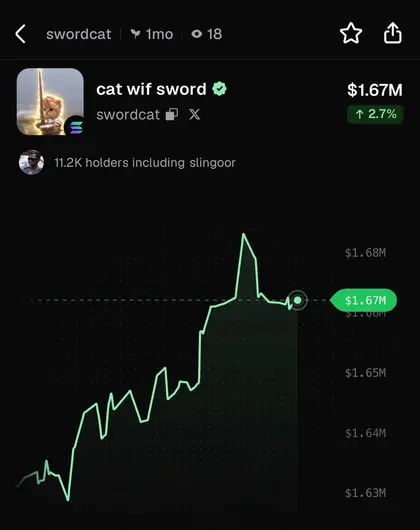
Compare the three. A coin a few minutes old with thousands of holders and a fast-rising market cap often has bots and bundled wallets behind it. A month-old coin with 11,200 holders, as above, has at least survived its first days. Then read the callouts from its holders: a reason with proof is worth more than a row of rocket replies.
The usual mistake is treating a holder you follow as a guarantee. Big accounts buy early, and some sell into their own followers.
Check 2: Look up the creator's wallet
The creator's past coins tell you more than anything on the coin page. In Terminal, open the coin and read its Dev Tokens tab: every coin the same wallet launched, how many graduated, and how high they went.
Ten launches with no graduation is a pattern. So is a creator who sells the whole first buy within minutes of every launch. Then look at how much the creator holds today. A big bag can be dumped on you, and a creator who already sold out has no reason to keep the coin alive. Our memecoin trading guide walks through the Dev Tokens tab and tracked dev highlights.
When a creator rugs you once, add the wallet to Terminal's deployer blacklist. It holds up to 1,000 creators, and their new coins disappear from your feed.
Check 3: Measure holder concentration and bundles
A spread-out top 10 can still hide one person. Read the concentration numbers together, not one at a time.
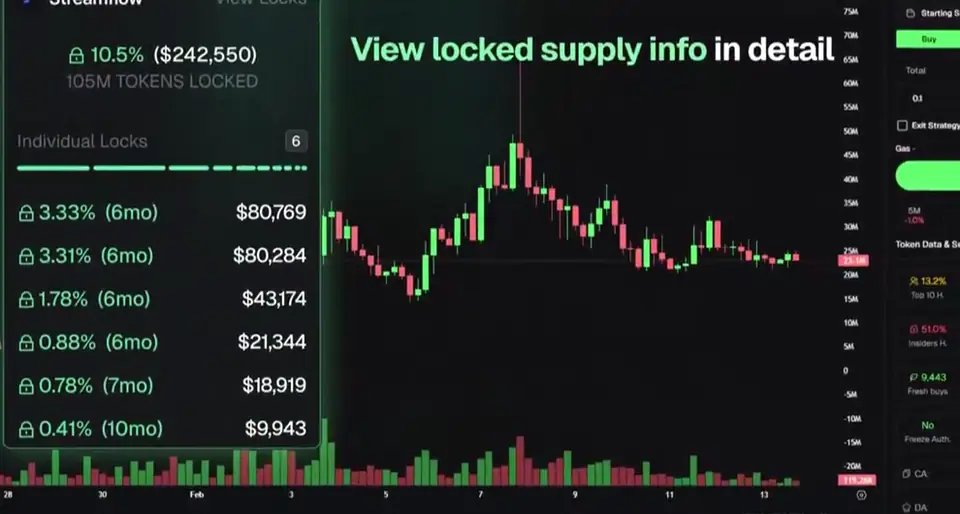
- Top 10 holders. Leave out the bonding curve or the liquidity pool, which shows as the first holder. If ten wallets hold a third of the supply, ten sales can sink the price.
- Insiders. Terminal's token panel shows insider holdings as a share. In the example above, insiders hold 51% while the top 10 hold 13%: the supply is split across many linked wallets.
- Funding. The Holders tab labels wallets that were funded at about the same time, often from one source. Ten fresh wallets funded in the same minute are one buyer.
- Bundles. A bundled launch buys from many wallets in the first block. Terminal's bundle map groups them into one cluster.
The sniper bot guide gives starting limits for snipers, bundles and the creator's share, and shows how to set them as filters so flagged coins never reach your feed.
Check 4: Check mint, freeze and locks where they matter
On a coin launched on Pump.fun, mint and freeze checks always pass. That is why an outside rug checker can give a Pump.fun coin a clean score minutes before the creator dumps it.
The checks matter for tokens that did not launch on Pump.fun, which the app also trades, such as tokens on Base, BNB Chain and other EVM chains. There, look before you buy. Mint authority should be revoked, or the supply can grow. With freeze authority still on, your tokens can be locked in place. And if the liquidity is neither burned nor locked, the owner can take it out. On EVM chains a contract can also block sells or tax them heavily; a token that nobody has sold yet is a warning.
Locks are the other half. Terminal reads token locks and shows how much supply is locked and how long each lock runs, as in the image above. A lock that ends next week is a sale on the calendar.
Check 5: Test the socials
A coin's links are fixed when it launches through Pump.fun's create flow, but a creator can attach any X account or community. Check that the account is real and older than the coin.
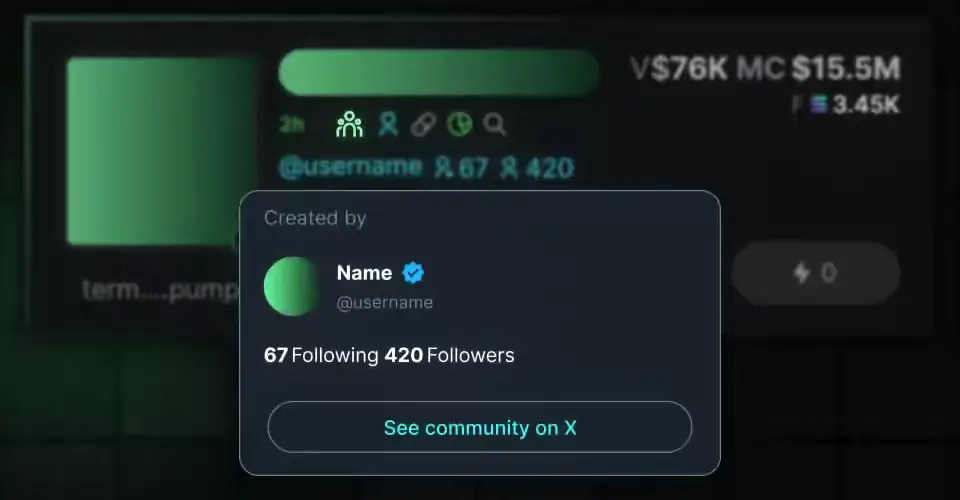
- Community age. Terminal colours the X community's age on coin cards in the Trenches feed. A community made an hour before launch was made for the launch.
- The creator behind it. The card shows the creator's following and followers. Thousands of followers who never reply are often bought.
- Copies. When a coin trends, dozens of copies launch with the same name and ticker. Match the contract address the project posts with the one you are buying.
- Borrowed names. A coin named after a company or a famous person has nothing to do with them unless their own account posts the address.
Check 6: Watch for sudden liquidity moves
On a Pump.fun coin, liquidity moves come from sales, so watch the big wallets. In Terminal, track the creator's wallet and the largest holders, and their buys and sells light up on the coin's trades tab.
Two cases do leave liquidity exposed. Anyone can open an extra PumpSwap pool for a coin, and whoever added that liquidity can withdraw it; only the liquidity placed at graduation is burned. And a coin paired with another token, a Custom Pair, depends on that token. If the pair token collapses, your coin loses value with it even when its own chart looks flat.
If you got rugged: what to do
- Stop buying. Averaging down into a coin the creator just sold is how one loss becomes two.
- Decide whether to sell. You can still sell the coin, because the liquidity cannot be pulled. Selling locks in the loss at today's price; holding keeps a small chance of a bounce and a large chance of zero. Pick one and move on.
- Block and report. Since October 30, 2026, the app lets you block, mute or report an account. Report the creator and any caller who pushed the coin and then sold.
- Blacklist the creator. Add the wallet to Terminal's deployer blacklist.
- Ignore recovery offers. Nobody can reverse a rug. A person or site that offers to get your money back wants your key or a fee.
- Keep the record. Note the date, the coin and the amount lost. A realized loss may matter for your taxes.
The two-minute checklist
- Age, holders and callouts on the coin page make sense together.
- The creator's past coins did not all die, and the creator's current bag is neither huge nor gone.
- Top 10, insiders and same-time funding stay low; no large bundle.
- For tokens from elsewhere: mint and freeze revoked, liquidity burned or locked.
- No big lock ends soon.
- The X account is older than the coin, and the contract address matches.
- You bought only what you can lose in full.